How to Stay at a Ryokan: Yukata, Futon, and Kaiseki Explained
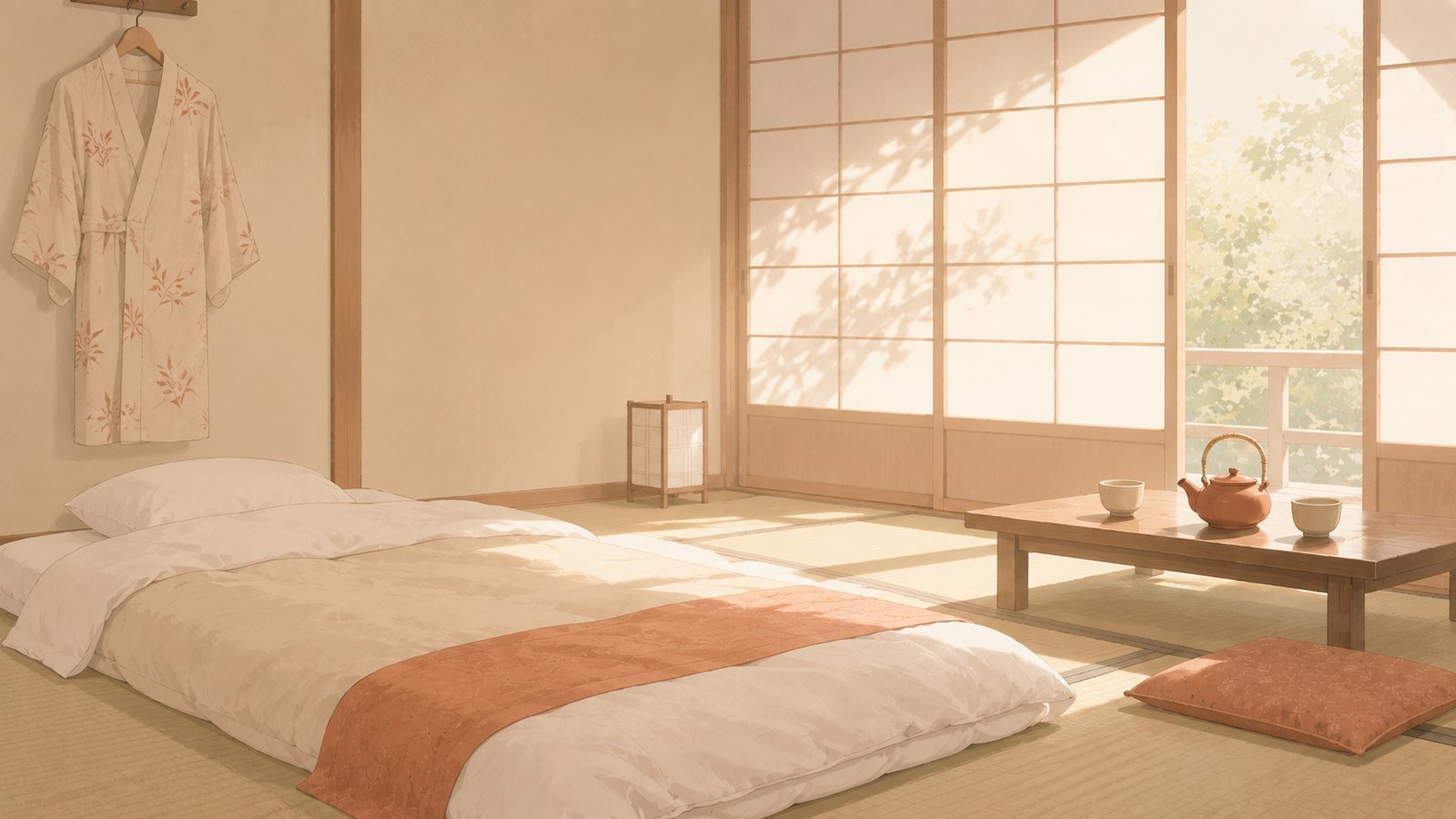
A ryokan is a traditional Japanese inn: tatami floors, sliding doors, a multi-course dinner, and usually an onsen. It is one of the most memorable nights you can spend in Japan. It also runs on a schedule and a set of conventions that are worth knowing in advance.
1. Book with meals, and tell them your arrival time
Most ryokan pricing includes dinner and breakfast, and the price is often per person, not per room. Dinner is served at a fixed time (usually 18:00–19:30) and the kitchen plans around your arrival. When you book, you will be asked for an estimated check-in time; if you are running late, call. Arriving after the dinner slot may mean no dinner.
2. Shoes off at the entrance
There is a step (genkan) at the entrance. Take your shoes off there, step up onto the raised floor, and put on the slippers provided. Your shoes will be stored by staff.
- Slippers are for corridors only. Take them off before stepping onto tatami.
- There is a separate pair of toilet slippers inside the bathroom. Swap into them, and swap back out when you leave — forgetting is the classic tourist mistake.
3. Your room
- Rooms have tatami mat floors and a low table. Do not roll suitcases on the tatami; carry them or leave them on the wooden border.
- There is no bed when you arrive. Staff will lay out futon on the floor while you are at dinner or in the bath. Do not put the futon away yourself in the morning; staff do it.
- You may have a private toilet and sink but share the bath. Many ryokan also offer rooms with a private open-air bath (rotenburo) at a higher price — worth it if you have tattoos or prefer privacy.
- Tea and sweets on the table are complimentary. Items in the fridge usually are not.
4. Wearing the yukata
A yukata (light cotton robe) is provided in your room. You can wear it anywhere inside the ryokan — to dinner, to the bath, to the lobby — and in onsen towns, around the streets as well.
- Put it on like a robe.
- Wrap the left side over the right. (Right over left is only used to dress the dead — this is the one rule people will notice.)
- Tie the sash (obi) at your waist, knot at the side or back.
- In cold weather, wear the short jacket (haori or tanzen) over it.
If the yukata is the wrong size, ask staff; they usually have several sizes.
5. Dinner
Dinner is typically kaiseki: a procession of 8–12 small dishes, seasonal and local, served either in your room or in a dining room.
- It arrives in a set order. Start with what is in front of you; staff will bring the next courses.
- Dishes are small by design. It adds up to a lot of food.
- You will not be able to choose the menu, but dietary restrictions must be given at booking time, not on the night.
- There is no dress code beyond the yukata.
6. The bath
The onsen is usually open late into the evening and again early morning. Bathe before dinner if you can — that is the traditional order, and the baths are quietest then. Men's and women's baths sometimes swap overnight, so check the curtain color each time. The rules are the same as at any onsen: wash first, no towel in the water, no swimsuit.
7. Breakfast and checkout
Breakfast is at a fixed time too, usually 7:30–9:00, and is typically Japanese: rice, miso soup, grilled fish, pickles, and often a small pot of something cooking on a burner. Checkout is early by hotel standards, often 10:00.
8. Things that surprise first-timers
- Walls are thin. Sliding paper doors are not soundproof. Keep your voice down at night.
- Wi-Fi can be weak in older buildings, especially in rooms far from the lobby.
- Staff may enter your room to lay out or put away futon. This is normal.
- Ryokan often have a curfew for the front door (around 22:00–23:00). Check if you plan to go out.
- No tipping. If you want to express thanks, a small wrapped gift from your home country is the traditional gesture, but it is entirely optional.
Quick checklist
| Do | Don't |
|---|---|
| Tell them your arrival time | Arrive late for dinner unannounced |
| Wrap yukata left over right | Walk on tatami in slippers |
| Bathe before dinner | Wear toilet slippers out of the bathroom |
| State dietary needs when booking | Roll suitcases on tatami |
Turn this into a route you can follow
tabilogue lets you save spots in order and follow other travelers' routes on a map — so you know exactly where to go next. Ready to book? Klook has tickets, tours and transfers across Japan.
The Klook link above is an affiliate link.