Photography Manners in Japan: Where You Can and Cannot Shoot
Japan is one of the most photogenic countries on earth, and most of the time nobody minds you pointing a camera at it. But a small number of places and situations have firm rules, and tourist behavior in recent years has made locals less patient. Here is where the lines are.
1. People
Japan has strong privacy norms and a legal "right to one's likeness." In practice:
- Do not photograph individuals without asking, especially close up. Crowd shots where no one is the subject are fine.
- Children are a hard no without a parent's permission.
- Staff at shops, restaurants, and shrines are not scenery. Ask before photographing them.
- If someone sees you pointing a camera at them and turns away or raises a hand, stop.
2. Geisha and maiko
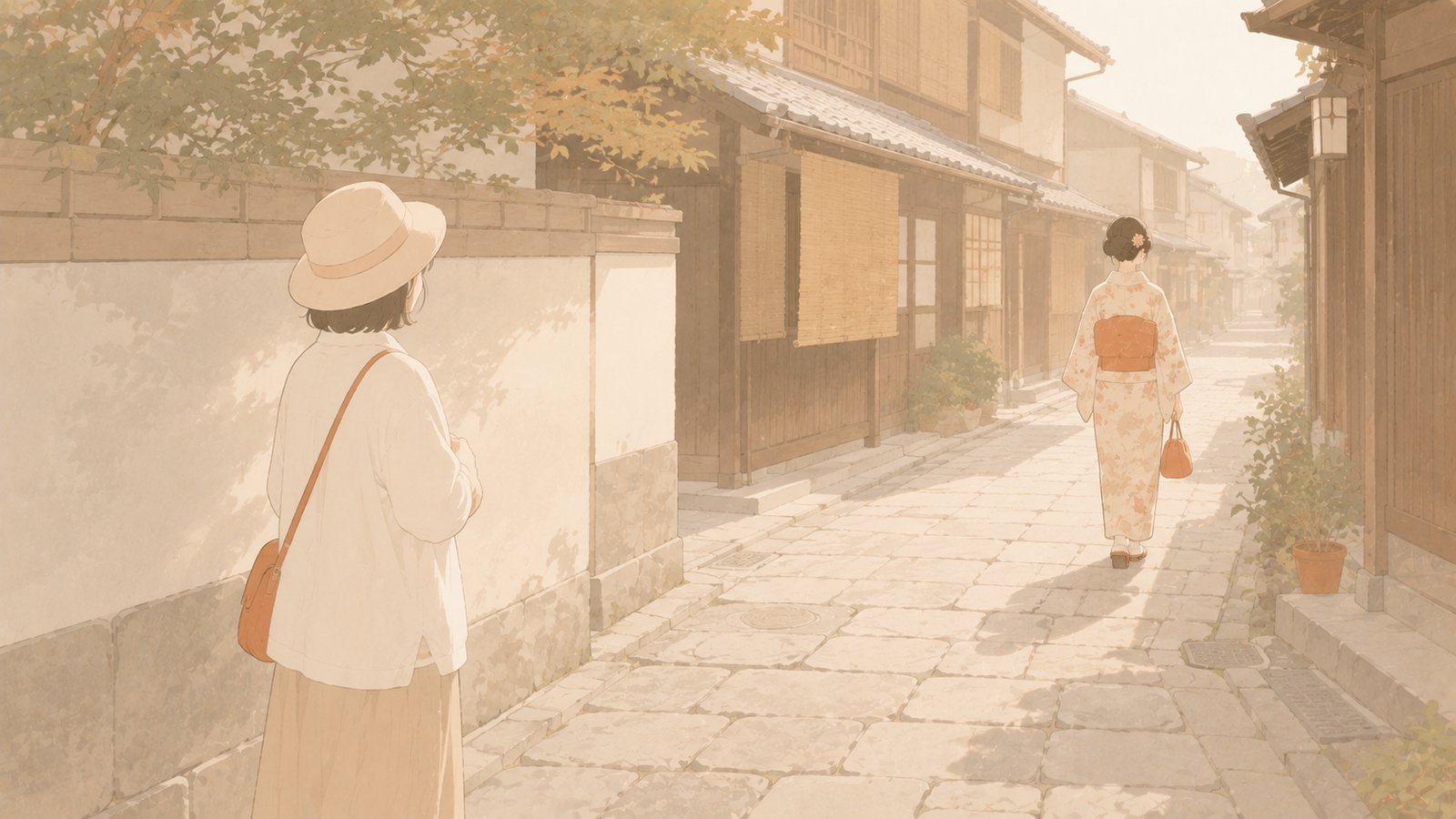
Kyoto's Gion district is the clearest example of tourist photography gone wrong. Geiko and maiko walking to appointments were chased, blocked, and grabbed for photos so often that in 2024 the local council closed the private alleys off Hanamikoji Street to tourists, with fines for entering. The main street is still open. The rules:
- Do not stop, block, touch, or follow a geiko or maiko.
- Do not enter private alleys, even if others are.
- A quick photo from a respectful distance on a public street as she passes is tolerated; a photo session is not.
- If you want a proper photo, book a paid experience or a tea house visit where photography is part of the arrangement.
3. Temples and shrines
- Exteriors, gardens, gates, and grounds: generally fine.
- Interiors of main halls and statues: often prohibited. Look for a camera icon with a line through it at the entrance. Some temples forbid photography of the principal Buddha image even if the hall is otherwise open.
- No flash, no tripods, no drones.
- Do not photograph people praying.
- Some famous sites (certain Zen gardens, Kyoto's Saiho-ji, parts of Nikko) have stricter rules — check at the entrance.
4. Trains and stations
Trainspotting is a national hobby, so platforms are used to cameras. But:
- Stay behind the yellow line and never step onto the tracks for a shot.
- Do not use tripods in busy stations.
- Photographing passengers is the same as photographing anyone: not without permission.
- Photographing station staff or train crews is fine from a distance; do not get in their way.
5. Restaurants and shops
- Photographing your own food is normal and usually welcome. A quick shot, not a lighting setup that holds up the kitchen.
- Some sushi counters and high-end restaurants ask for no photos of the chef at work; many now say so explicitly.
- Department stores, supermarkets, and many shops prohibit photography of products and displays. A no-camera sign at the entrance is common.
- Never photograph inside fitting rooms, bathrooms, or onsen changing rooms. Phones are often banned in bathing areas entirely.
6. Private property and residential streets
Much of what looks like a picturesque alley is someone's front door. Photographing houses from a public street is legal, but pointing a camera into windows or gardens is not welcome. Several residential neighborhoods near major sights (parts of Gion, streets around Fushimi Inari, parts of Kamakura) now have signs asking tourists not to photograph, because of the volume.
7. Drones
Drone use is heavily regulated. Flying over cities, crowds, airports, or most tourist sites requires permits that tourists will not have. Temples and parks almost universally ban them. Assume you cannot fly.
8. Vlogging and filming
Walking through a city with a camera on a stick is legal but increasingly unpopular. Problems arise when you:
- Film inside shops, restaurants, or trains without permission
- Film people at close range as content
- Block sidewalks or shop entrances
- Talk loudly to camera in quiet places
If a staff member asks you to stop filming, stop.
9. Sharing photos of people
Posting a recognizable stranger's face online without consent can cause real problems in Japan. Blur faces or choose another shot.
10. Making your photos into a route
If you are shooting your trip anyway, consider recording where each photo was taken. Reordering them into the sequence you actually walked turns a camera roll into a route someone else can follow — which is what tabilogue is for.
Quick checklist
| Do | Don't |
|---|---|
| Ask before photographing a person | Chase or block geisha |
| Check for no-camera signs at temple halls | Photograph inside shops with a no-photo sign |
| Stay behind the yellow line | Fly a drone |
| Photograph your food quickly | Film inside restaurants without asking |
Turn this into a route you can follow
tabilogue lets you save spots in order and follow other travelers' routes on a map — so you know exactly where to go next. Ready to book? Klook has tickets, tours and transfers across Japan.
The Klook link above is an affiliate link.