Eating Out in Japan: Restaurant and Izakaya Manners
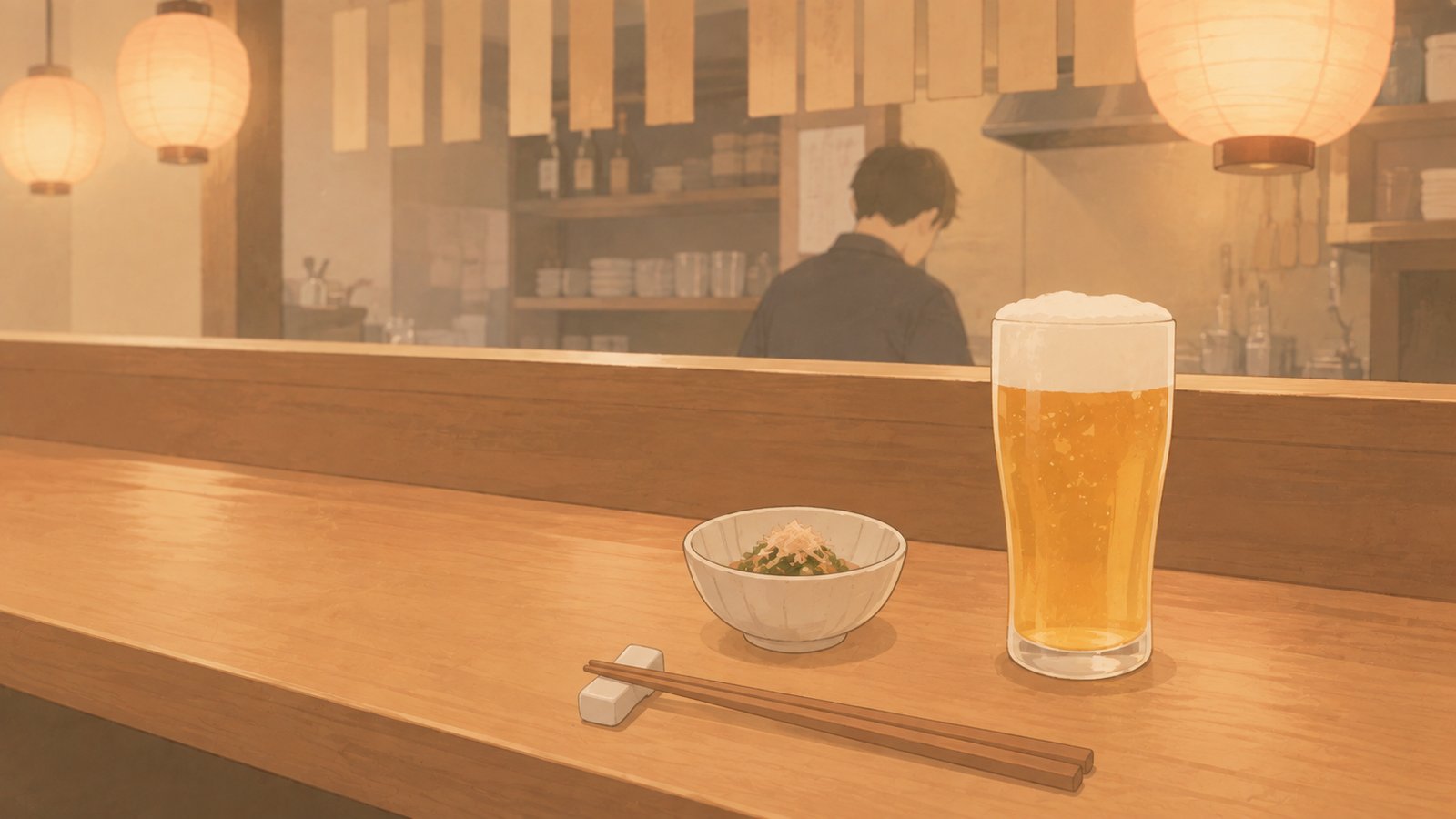
Eating is probably the best part of any trip to Japan, and restaurants are generally relaxed about foreigners. But a few things work differently from what you may be used to, and knowing them in advance makes the whole experience smoother.
1. Getting a table
- Wait at the entrance to be seated, even if the place looks empty. Staff will ask how many people (hold up fingers if in doubt).
- Many small restaurants have no reservations and a queue outside. Join the line; it usually moves faster than it looks.
- Some popular places use a ticket machine at the door: buy your meal ticket first, then sit down and hand it to staff.
- At counters, you may be asked to write your name on a list. Write it in Roman letters — that is fine.
2. The hot towel and water
You will usually receive a small wet towel (oshibori) for your hands and a glass of water or tea, free of charge. The towel is for hands, not your face.
3. Otoshi: the appetizer you did not order
At izakaya (Japanese pubs), a small dish appears at your table without being ordered. This is otoshi (or tsukidashi in western Japan): a mandatory seat charge, typically ¥300–600 per person, served as food. It is not a scam and cannot usually be refused. Think of it as a cover charge.
4. Ordering
- Izakaya meals are shared: order a few dishes at a time, as you go, rather than everything at once.
- Many restaurants have a call button on the table. Press it when you are ready — staff will not hover.
- If there is no button, catch a server's eye and say "sumimasen" (excuse me). It is not rude.
- Picture menus and tablet ordering are common. Google Lens handles most Japanese-only menus well.
- "Toriaezu nama" ("a draft beer for now") is the classic first order at an izakaya.
5. Chopstick manners
Nobody will be offended if you are clumsy with chopsticks. A few things are genuinely taboo, though, because they echo funeral rituals:
- Do not stick chopsticks upright in a bowl of rice.
- Do not pass food from your chopsticks directly to someone else's chopsticks.
- Do not point with them, spear food with them, or wave them around while talking.
- Use the chopstick rest when you put them down; if there is none, lay them across the edge of a plate or the paper sleeve.
- When taking from a shared dish, it is polite (but not mandatory) to use the serving chopsticks or the back ends of your own.
6. Sounds and other table habits
- Slurping noodles is fine. It is expected with ramen and soba.
- Lifting a small bowl (rice, miso soup) to your mouth is correct, not rude.
- Say "itadakimasu" before eating and "gochisosama deshita" when you finish or leave — both are appreciated.
- Blowing your nose at the table is considered unpleasant; step away if you can.
7. No tipping
There is no tipping in Japan, in restaurants, taxis, hotels, or anywhere else. Service is included. Leaving coins on the table will often result in staff chasing you down the street to return them. A genuine thank-you is the tip.
8. Paying
- In most restaurants you pay at the register near the exit, not at the table. Take the bill slip from your table to the counter.
- Put cash or card on the small tray, not into the cashier's hand.
- Splitting the bill (betsu-betsu) is possible at many places, but not all. At izakaya it is common for one person to pay and the group to settle up later.
- Cards are widely accepted in cities, but small independent restaurants and ramen shops are often cash-only. Always carry some yen.
9. Allergies and dietary needs
Vegetarian and vegan options are still limited outside big cities, and dashi (fish stock) is in almost everything. A printed card in Japanese explaining your restriction works far better than explaining verbally. Strictly halal or kosher food requires advance research.
Quick checklist
| Do | Don't |
|---|---|
| Wait to be seated | Tip |
| Use the call button | Stick chopsticks upright in rice |
| Slurp your noodles | Pass food chopstick-to-chopstick |
| Pay at the register | Expect to split the bill everywhere |
| Carry cash | Argue about the otoshi charge |
Turn this into a route you can follow
tabilogue lets you save spots in order and follow other travelers' routes on a map — so you know exactly where to go next. Ready to book? Klook has tickets, tours and transfers across Japan.
The Klook link above is an affiliate link.