Everyday Etiquette in Japan: Shoes, Bowing, Trash, and Queues
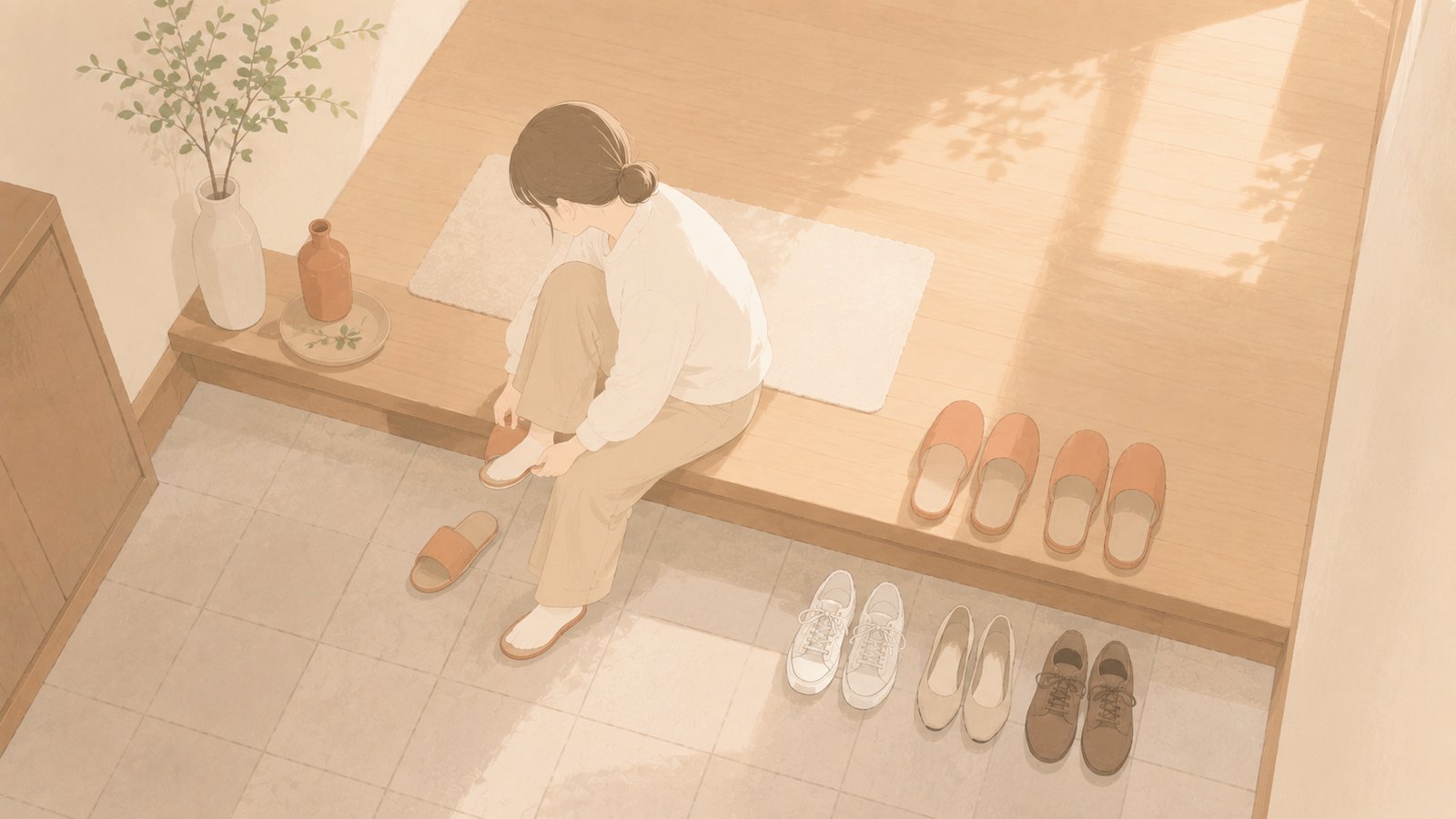
Japanese society runs on a large number of small, unspoken conventions. You will not be expected to know them all, and nobody will scold you. But the more of them you follow, the more relaxed every interaction becomes. Here are the ones that matter most day to day.
1. Shoes
The rule of thumb: if there is a step up and a row of slippers, shoes come off.
- Always off: private homes, ryokan, temples' interior halls, some restaurants with tatami seating, fitting rooms in clothing shops.
- Never off: hotels (Western-style), shops, trains, most restaurants with chairs.
- Step out of your shoes and directly onto the raised floor without putting your socks on the lower level.
- Wear socks without holes. You will be taking your shoes off more often than you expect.
2. Bowing
You do not need to master bowing. A slight nod of the head is enough in almost every tourist situation — thanking a shop clerk, greeting hotel staff, apologizing for bumping into someone. Deeper bows are for formal contexts you are unlikely to be in. Do not bow and shake hands at the same time; pick one.
3. There are no trash cans
Public bins were removed from most streets decades ago and have not come back. The convention is that you carry your trash with you until you find a bin, usually at a convenience store, train station, or your hotel. Keep a small bag in your pocket for wrappers.
- Eating while walking is frowned upon, partly for this reason. Eat near where you bought the food, then dispose of the wrapper there.
- When you do find bins, they are sorted: burnable, plastic bottles, cans. Follow the pictures.
4. Queues
Japan queues for everything: trains, buses, elevators, restaurants, escalators, ticket machines. Look for painted lines or a row of people and join the end. Cutting in, even unintentionally, is one of the few things that will get you a reaction.
5. Noise
Public spaces are quiet by default. Phone calls on trains are not done; loud conversation in restaurants draws looks. Speakerphone and playing video without headphones are considered rude anywhere.
6. Money and the tray
At any register there is a small tray. Put your cash or card on it; the cashier will put your change on it. Handing money directly to the cashier is not wrong, but the tray is the norm. Coins are counted out quite precisely — let them finish.
7. Convenience stores
Konbini (7-Eleven, FamilyMart, Lawson) are the backbone of tourist life: food, ATMs that accept foreign cards, printing, ticket pickup, luggage shipping, and clean toilets. A few conventions:
- Staff will ask if you want your food heated ("atatamemasu ka?") and whether you need a bag (bags cost a few yen).
- There is usually a small eating area, but otherwise eat outside or take it with you.
- Toilets are typically free to use; it is polite to buy something.
8. Toilets
- Most toilets are electronic, with a bidet panel. The button with a stop symbol is the one to remember.
- Toilet paper goes in the toilet, not a bin (Japan's plumbing handles it).
- Public toilets in stations and parks are generally clean and free.
- Some older sites have squat toilets. Face the hood.
9. Masks, coughing, and sneezing
Wearing a mask when you have a cold is normal and considerate. Cover your mouth when coughing. Blowing your nose loudly in public is considered unpleasant; sniffing is oddly more acceptable.
10. Tattoos
Tattoos are legal and increasingly common among young Japanese, but they are still banned at many onsen, public pools, gyms, and some beaches. Covering them in those places is the expectation; on the street, nobody cares.
11. Smoking
Smoking on the street is banned in most city centers; look for designated smoking areas (often glass booths). Many restaurants and bars are now non-smoking, but some small izakaya still allow it.
12. Small things people appreciate
- "Sumimasen" works as excuse me, sorry, and thank you.
- Taking off your backpack in crowded spaces.
- Not touching merchandise you do not intend to buy, especially food.
- Being on time. Five minutes early is on time.
Quick checklist
| Do | Don't |
|---|---|
| Take shoes off at a step | Eat while walking |
| Carry your trash | Cut in line |
| Use the money tray | Take phone calls on trains |
| Nod to say thanks | Smoke outside designated areas |
Turn this into a route you can follow
tabilogue lets you save spots in order and follow other travelers' routes on a map — so you know exactly where to go next. Ready to book? Klook has tickets, tours and transfers across Japan.
The Klook link above is an affiliate link.